Table of Contents
ToggleNobody wants to wake up to a line of ants marching across the kitchen counter, or worse, finding them in the pantry. Liquid ant killers are one of the most effective ways homeowners tackle ant infestations quickly and without the mess of granular baits or sprays. Unlike surface-level treatments, liquid ant killers work by targeting the entire colony, making them a practical first line of defense for most indoor ant problems. Understanding how they work, which type suits your situation, and how to apply them correctly can mean the difference between a solved problem and a recurring headache. This guide walks you through everything you need to know about liquid ant killers, from the science behind them to the common pitfalls that derail results.
Key Takeaways
- Liquid ant killers work by using slow-acting poison that foraging ants carry back to the colony, eliminating the entire population through food-sharing behavior rather than just killing visible ants.
- Strategic placement of liquid ant killer baits directly on ant trails and entry points is essential—watch where ants travel before applying treatments to maximize effectiveness.
- Chemical liquid baits with fipronil or indoxacarb provide faster, more reliable results (48 hours to 2 weeks) compared to natural alternatives like borax or diatomaceous earth.
- Avoid common mistakes like aggressive cleaning around baits, mixing multiple pest control methods, using insufficient bait quantities, or switching products prematurely—patience for 10–14 days is critical for full colony elimination.
- After baits eliminate the colony, seal cracks and entry points with caulk and remove exterior food sources to prevent reinfestation and maintain long-term protection.
How Liquid Ant Killers Work
Liquid ant killers operate on a simple but clever principle: ants carry the poison back to the colony. Most liquid baits contain a slow-acting active ingredient mixed with an attractant, usually sugar or honey, that draws foraging ants like a dinner bell.
When an ant finds the bait, it drinks or absorbs the liquid and returns to the nest. The slow-kill formula is intentional: if the ant died immediately, it wouldn’t make the trip home. Instead, it delivers the poison to the queen and other colony members through food-sharing behavior called trophallaxis. The entire colony can be eliminated within days to a couple of weeks, depending on the product and colony size.
Common active ingredients include fipronil (an insecticide that disrupts the nervous system) and indoxacarb (which works similarly). These are formulated to be safe for household use in small quantities while remaining lethal to insects at the dosages ants consume. The bait itself is typically contained in a small plastic station or station with small ports, limiting human and pet contact to the liquid inside.
The key advantage over sprays: you’re not just killing the ants you see. You’re eliminating the source. No source, no returning problem.
Choosing the Right Liquid Ant Killer for Your Home
Not all liquid ant killers are created equal. Your choice depends on where the ants are, what species you’re dealing with, and whether you have kids or pets in the house.
Indoor vs. outdoor formulations matter. Indoor liquid baits come in sealed stations designed for counter placement or cabinet mounting, they’re not meant to be poured out and left exposed. Outdoor liquid baits are often sold in squeeze bottles or pour-bottles for perimeter application around the foundation or entry points.
Colony size and speed of results vary by product. Budget brands may take three weeks: premium products like Terro Liquid Ant Baits can show results within 48 hours. Faster isn’t always better if the colony is larger, a slow bait sometimes ensures full penetration before the colony realizes the threat.
Cost typically ranges from $5 to $15 per unit or bottle, depending on quantity and brand. A single station covers one entry point: a bottle might treat an entire perimeter.
Natural vs. Chemical Options
Homeowners often ask whether natural options work. The short answer: natural ant killers are slower and less reliable, but they’re worth considering if you have infants, pets, or severe chemical sensitivities.
Chemical options (fipronil, indoxacarb) are synthetic insecticides proven in decades of residential use. They’re odorless, work quickly, and the amount consumed by ants is negligible, think of it as a precisely dosed, targeted treatment.
Natural alternatives include borax-based baits, diatomaceous earth, and essential oil solutions. Borax works similarly to chemical baits, slow-acting, colony-targeting, but it’s less consistent and takes longer. Diatomaceous earth kills on contact by cutting the ant’s exoskeleton: it doesn’t target the colony. Essential oils (peppermint, cinnamon) repel ants but don’t eliminate the problem.
If you’re leaning natural, borax mixed with powdered sugar and water (forming a paste or liquid) can work, but it’s a DIY gamble. For reliable results on a timeline, chemical liquid baits are the standard. Resources like Good Housekeeping’s best ant killers review provide side-by-side comparisons if you want to narrow down by active ingredient or user ratings.
Step-by-Step Application Guide
Proper placement and application are half the battle. Here’s how to do it right.
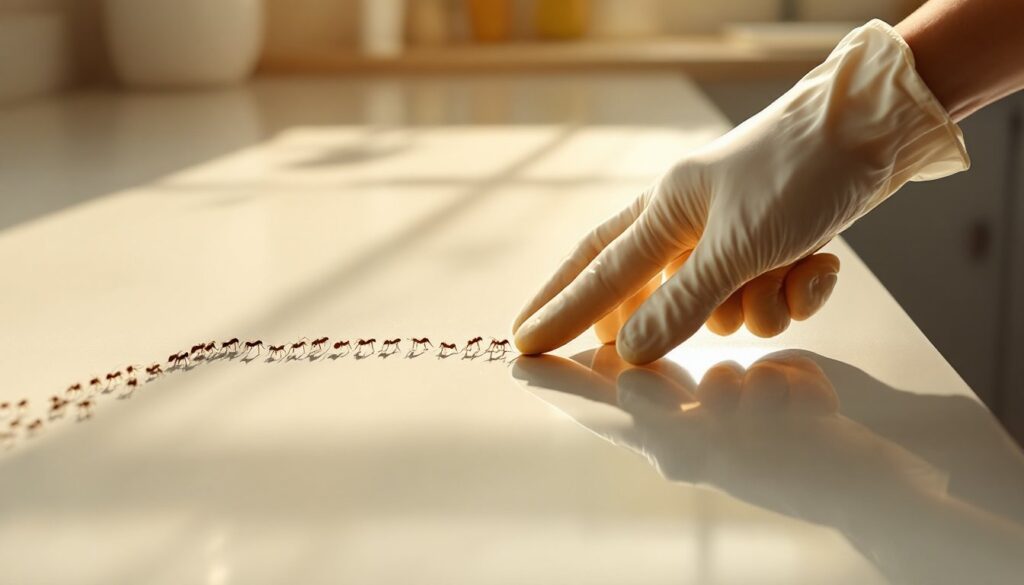
1. Identify entry points and trails. Before you open a single station, watch where ants are coming in and moving. Look along baseboards, window frames, cracks in the foundation, and under appliances. Mark two or three high-traffic routes.
2. Clean the area lightly. Wipe down surfaces where you’ll place the bait using a damp cloth or mild soap and water, nothing harsh. You want to remove competing food sources without leaving residue that might repel ants. Let dry completely.
3. Place stations or liquid directly. For indoor station-based baits, place one station on or near each trail. Some stations have a tab you peel back to expose the bait ports: others come pre-opened. Wedge them into corners or place them flat on surfaces. For liquid bottles, apply according to package directions, typically a few drops or a thin line along the perimeter outside.
4. Do not disturb for 48 hours. Resist the urge to check progress or clean around the baits. Let the ants work.
5. Reapply if needed. If activity persists after two weeks, replace baits or apply a fresh bottle. Multiple applications are normal for large colonies.
Safety note: Keep baits away from food prep areas, children’s reach, and pet feeding zones. If you have curious toddlers or pets, wall-mounted stations or placement inside lower cabinets (with a child lock) is safer than floor-level exposure. Liquid baits in sealed stations pose minimal risk, but accidental ingestion should be treated as a poison control situation, have the Real Simple guide on home organization and safety bookmarked for reference on safe household product storage, or call Poison Control (1-800-222-1222) if exposure occurs.
Safety Tips and Best Practices
Even though liquid ant killers are formulated for household safety, sensible precautions matter.
Wear gloves when handling opened bottles or placing baits. Most modern formulations are low-toxicity, but your skin doesn’t need unnecessary contact. Avoid inhaling vapors if using an aerosol or spray variant, ensure ventilation.
Never mix products. Combining liquid baits, sprays, or other pesticides can create unexpected chemical reactions or reduce effectiveness. Stick to one approach per treatment cycle.
Keep away from pets’ mouths and water bowls. Cats and dogs shouldn’t have direct access to baits. If you have pets, place stations in areas they can’t reach, behind furniture, under cabinets with baby locks, or in pantries you can secure. Fish tanks, bird feeders, and reptile enclosures should be covered or removed before application, especially if using outdoor perimeter treatments.
Wash your hands thoroughly after placement. Standard soap and water suffice. Change clothes if you’ve been handling large quantities, and wash those clothes separately.
Store the product properly. Keep liquid baits in a cool, dry place (not the refrigerator), out of direct sunlight. Sealed bottles last longer and stay effective. Check the expiration date, old baits lose potency.
Dispose of used stations responsibly. Most municipalities allow sealed, empty bait stations in regular household trash. Check your local waste guidelines to be sure. Never pour liquid bait down the drain or into the ground where it could leach into water supplies.
If anyone ingests the bait accidentally, call Poison Control immediately at 1-800-222-1222. Have the product label and active ingredient information ready to share.
Common Mistakes to Avoid
Most homeowners sabotage their own results through one of these missteps.
Placing baits in the wrong spots. Ants follow established trails: if you put a bait station in a random corner, you’re betting the colony finds it. Watch the ants first, then place baits directly on or near their paths.
Cleaning too aggressively around baits. A thorough scrubbing removes the pheromone trail ants use to navigate. Light cleaning to clear competing food is fine: obsessive wiping redirects ant traffic away from your bait.
Mixing in other pest control methods. If you spray insecticide in one room while using liquid baits in another, you’re creating conflicting stimuli. Ants detect the spray and avoid that area entirely. Pick one method and give it two to three weeks before escalating.
Using insufficient bait quantity. One station for a kitchen-wide infestation isn’t enough. Large colonies need multiple stations or multiple applications. Underbait and you’ll see short-term improvement followed by regrowth.
Switching products midstream. If you start with one bait and switch after a week because you’re not seeing results, you’re resetting the clock. Most liquid baits take 10–14 days to eradicate a colony. Patience beats panic.
Ignoring the source entry. Baits eliminate the colony, but ants can keep coming in if the entry crack or gap isn’t sealed. After the population crashes, caulk holes, seal gaps, and remove exterior food sources (pet dishes, trash, fruit debris) to prevent reinfestation. Hunker’s home improvement guides have detailed caulking and sealing tutorials if you need a refresher on the mechanics.
Not reading the label. Different products have different active ingredients, application rates, and reapplication windows. Skipping the label is like building a deck without checking beam spacing, you’ll get results, but not the right ones.
Conclusion
Liquid ant killers are a reliable, straightforward solution to an otherwise frustrating problem. The key is understanding how they work, targeting the colony, not just the visible ants, and applying them with patience and precision. Choose the right product for your situation, place baits strategically, give the treatment time to work, and avoid the common pitfalls that undermine success. Most homeowners see a full resolution within 14 days. After that, seal entry points and maintain basic cleanliness to keep ants from returning. You’ve got this.